 |
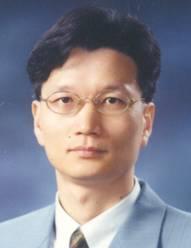
Sung-Bae Cho,
|
Abstract:
Microarray technology has supplied a large volume of data, which changes
many problems in biology into the problems of computing. As a result techniques for extracting useful information from the data are developed. In particular, microarray technology has been applied to prediction and diagnosis of cancer, so that it expectedly helps us to exactly predict and diagnose cancer. To precisely classify cancer we have to select genes related to cancer because the genes extracted from microarray have many noises.
In this talk, I attempt to explore seven feature selection methods and four
classifiers and propose ensemble classifiers in three benchmark datasets to
systematically evaluate the performances of the feature selection methods and machine learning classifiers.
Three benchmark datasets are leukemia cancer dataset, colon cancer dataset
and lymphoma cancer data set. The methods to combine the classifiers are majority voting, weighted voting, and Bayesian approach to improve the performance of classification. Experimental results show that the ensemble with several basis classifiers produces the best recognition rate on the benchmark datasets.
Bio Sketch:
Sung-Bae Cho received the B.S. degree in computer science from Yonsei University, Seoul, Korea, in 1988 and the M.S. and Ph.D. degrees in computer science from KAIST (Korea Advanced Institute of Science and Technology), Taejeon, Korea, in 1990 and 1993, respectively. He has worked as a Member of the Research at the Center for Artificial Intelligence Research at KAIST from 1991 to 1993. He was an Invited Researcher of to Human Information Processing Research Laboratories at ATR (Advanced Telecommunications Research) Institute, Kyoto, Japan from 1993 to 1995, and a visiting scholar at University of New South Wales, Canberra, Australia in 1998. Since 1995, he has been an associate professor in the Department of Computer Science, Yonsei University. His research interests include neural networks, pattern recognition, intelligent man-machine interfaces, evolutionary computation, and artificial life. Dr. Cho was awarded outstanding paper prizes from the IEEE Korea Section in 1989 and 1992, and another one from the Korea Information Science Society in 1990. He was also the recipient of the Richard E. Merwin prize from the IEEE Computer Society in 1993. He was listed in Who's Who in Pattern Recognition from the International Association for Pattern Recognition in 1994, and received the best paper awards at International Conference on Soft Computing in 1996 and 1998. Also, he received the best paper award at World Automation Congress in 1998, and listed in Marquis Who's Who in Science and Engineering in 2000 and in Marquis Who's Who in the World in 2001. He is a Member of the Korea Information Science Society, INNS, the IEEE Computer Society, and the IEEE Systems, Man, and Cybernetics Society.